Stainless steel is commonly specified for hotel room numbers, office door plates, apartment signs and commercial identification because it supports clean architectural finishes and several fabrication methods. The phrase “stainless steel door sign,” however, does not define the grade, thickness, surface finish, graphics or fixing method. Those details affect appearance, durability, price and production feasibility.
1. Start With The Installation Environment
Material selection should begin with the location of the sign. A guest-room number in an air-conditioned corridor has different exposure from an exterior door plate near the coast. Cleaning chemicals, humidity, direct rain and physical contact can also influence the recommended metal and finish.
- Indoor or outdoor installation
- Dry interior, humid service area or exposed façade
- Coastal or salt-air environment
- Frequency and type of cleaning
- Contact with fingerprints, luggage, carts or equipment
- Required service life and maintenance plan
2. Compare 304 And 316 Stainless Steel
| Specification Point | 304 Stainless Steel | 316 Stainless Steel |
|---|---|---|
| Typical project use | Interior architectural signs, office door plates, hotel room numbers and general commercial identification. | Exterior, coastal, humid or chloride-exposed projects where improved corrosion resistance is required. |
| Appearance | Available in brushed, polished, painted and decorative coated finishes. | Can use similar finishes; the grade itself may not be visually obvious after finishing. |
| Corrosion consideration | Suitable for many general environments when correctly finished and maintained. | Contains molybdenum and generally provides better resistance in chloride-related exposure. |
| Cost | Usually the more economical starting point. | Usually carries a higher material cost and should be specified where the environment justifies it. |
The table is a purchasing guide rather than an engineering warranty. Confirm the environmental conditions, cleaning regime, exact alloy specification and finish with the project consultant or responsible specifier.
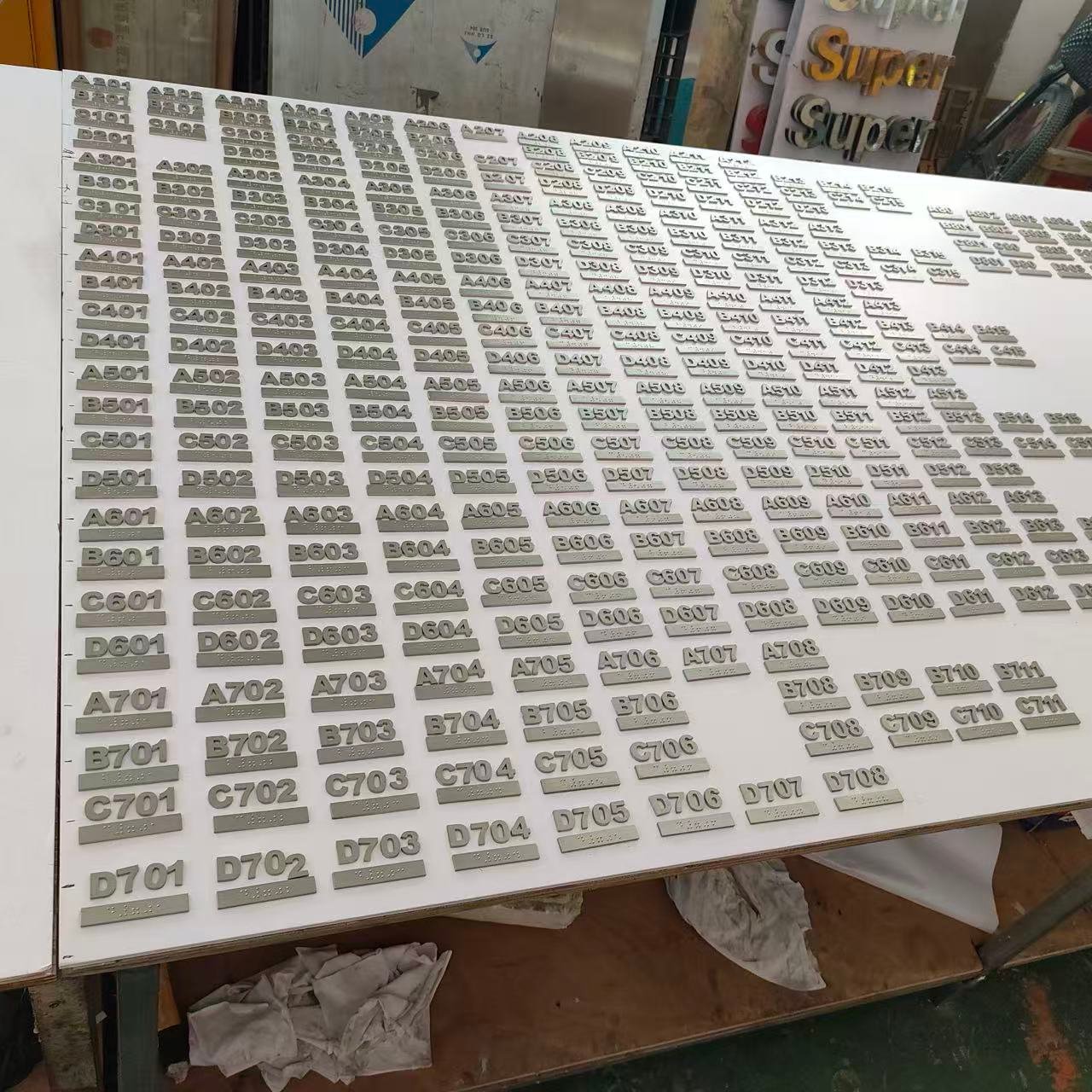
3. Define Thickness And Construction
Door signs may be fabricated as flat plates, layered signs, built-up components or combinations of metal and acrylic. A typical reference range for a flat metal face may be 0.8–3.0 mm, but the correct thickness depends on overall size, edge treatment, fixing method and required rigidity.
- Overall width and height
- Metal face thickness
- Flat, folded, built-up or layered construction
- Square, rounded, beveled or custom edge profile
- Single plate or removable insert system
- Required tolerances and alignment method
A large thin plate can distort, while a small sign may not need heavy construction. Ask the manufacturer to review thickness together with the finished size and mounting method.
4. Specify The Surface Finish
“Brushed stainless steel” is not a complete finish specification. State the grain direction, gloss level and whether a physical sample must be matched. For mirror-polished signs, confirm the acceptable visual quality and protective-film requirement. Painted, PVD or electroplated appearances should be approved against a sample whenever color accuracy matters.
| Finish | Points To Confirm |
|---|---|
| Brushed / hairline | Grain direction, texture, consistency between batches and clear protective treatment if required. |
| Mirror polished | Reflectivity, acceptable surface quality, handling protection and fingerprint expectations. |
| Painted | Pantone, RAL or approved sample, gloss level, coating system and exposure conditions. |
| PVD / plated appearance | Color standard, gloss, sample approval, substrate preparation and acceptable batch variation. |
5. Choose The Graphic Process
Room numbers, text, icons and logos can be applied in several ways. The artwork, minimum line width, viewing distance and tactile requirements will influence which process is practical.
- Etched and paint-filled text or graphics
- Printed color graphics
- Engraved information
- Cut-through or raised metal characters
- Applied acrylic or metal elements
- Tactile characters and Braille to an approved local standard
For etched graphics, confirm the recessed areas, fill colors, minimum detail and expected exposure. See the etched and paint-filled metal sign page for a fuller specification checklist.
6. Confirm Mounting Before Quotation
The door or wall material affects adhesive selection, hole positions and installation hardware. Supply a photo or construction detail instead of asking the manufacturer to assume the mounting surface.
- High-bond adhesive or foam tape
- Concealed studs or threaded rods
- Visible screws with prepared holes
- Stand-offs or decorative caps
- Mechanical brackets for removable signs
For fire-rated doors, heritage surfaces or controlled interior systems, obtain project approval before drilling, bonding or modifying the substrate.
7. Prepare A Quotation Package
| Information | What To Send |
|---|---|
| Artwork | Vector logo, outlined text, icons and dimensioned PDF or CAD drawing. |
| Material | 304 or 316 stainless steel, thickness and any consultant specification. |
| Finish | Brushed, polished, painted or plated reference with grain and gloss requirements. |
| Schedule | Sign codes, room numbers, quantities and any variable information. |
| Installation | Door or wall material, mounting method, location photos and required hardware. |
| Commercial details | MOQ requirement, sample approval, packaging labels, destination and target date. |
Frequently Asked Questions
Is 316 stainless steel always necessary outdoors?
No single grade fits every outdoor project. Exposure, location, finish, maintenance and the project specification should be reviewed together. Coastal and chloride-related conditions are common reasons to consider 316.
Can stainless steel door signs be color plated?
Decorative plated or PVD appearances may be possible. Confirm the required color, gloss, substrate, sample approval and expected batch tolerance before production.
What is the MOQ?
MOQ is project-based because dimensions, artwork, material, finish and processes are customized. Prototype and small-batch requirements can be reviewed before the final order quantity is confirmed.